
Data Exchange Platform Governance: Plumbing Does Not Grant Access

Updated: May 25
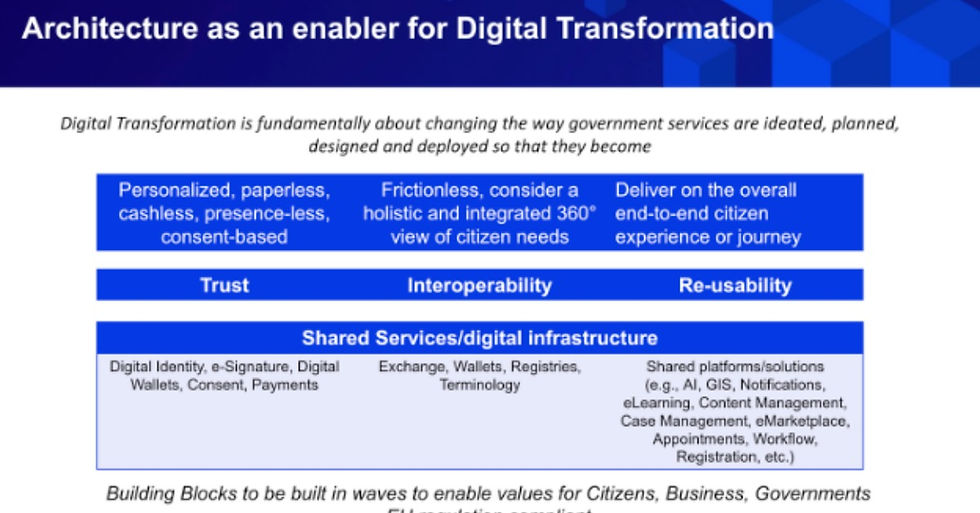
A data exchange platform connects agencies. It does not transfer ownership of sector data, and it does not create entitlement to receive it. The difference matters, because interoperability becomes lawful public delivery only when each disclosure is tied to Legal authority, executed within an Institutional mandate, limited to necessity, and enforceable under scrutiny.
The contradiction worth stating plainly is this: programmes often speak as if joining the platform enables access, when every legitimate request still depends on purpose, mandate, minimal data points, and a remedy path that can actually change outcomes.
Mandate and remedy decide access, not ecosystem membership
A connected institution gains capability, not entitlement. Permission to receive a specific data point must be traceable to an institutional purpose and a mandate-bound procedure, and the requesting institution must be compellable for the consequences of using the data in a decision. Without that, access becomes a convenience feature rather than a public act.
Remedy is the test that separates lawful access from technical access. If a disputed eligibility decision depends on exchanged data, the system must show which institution can correct the Canonical records, which institution must reverse downstream effects, and how that correction propagates. Complaint intake without correction is administrative theatre.
The access control discipline that makes this operational is mandate gating.
A real-world pattern already exists, and it proves the point
If you want a concrete illustration of how an exchange layer can be strong without becoming a data owner, look at the X-Road data exchange model and its architecture design goals. It is explicitly decentralised, the service provider remains in control of access, and the exchange layer does not change ownership of data. Estonia’s X-tee operational description adds the missing governance reality: access still depends on agreements and rules, not merely technical membership.
This is not a niche preference. It is the only architecture posture that survives scrutiny in government systems where a data disclosure can change someone’s legal position.
Data minimisation is the only interface rule that survives donor scale
Modern privacy and data protection regimes converge on one practical discipline: do not collect or disclose more than is necessary for the stated purpose. Data minimisation is not a policy aspiration. It is a Public interface property.
In a data exchange context, that means the platform should not expose broad query surfaces by default. It should route narrowly defined use cases with attribute-level allow lists, necessity statements tied to each request type, and logged denials treated as normal governance outcomes. The ability to ask is never the justification to ask, and the ability to route is never permission to disclose.
Where consent is used as a condition for disclosure, enforceability is the difference between rights and theatre. A toggle is not withdrawal if the stop condition cannot propagate across relying parties and cannot be reconstructed as evidence under review. The failure mode and the control posture are set out in consent withdrawal safeguards.
Trust frameworks span multiple infrastructures and multiple services
A trust framework in this context is a roles-and-rights framework. It allocates entitlements, duties, constraints, evidence expectations, and remedies around personal and organisational data. It spans multiple DPIs and multiple DPSs because it governs the whole chain of reliance, not a single platform.
This is consistent with how interoperability governance is framed in the New European Interoperability Framework, which treats legal and organisational interoperability as first-class layers alongside semantic and technical alignment. It also aligns with the World Bank ID4D legal framework guidance, which separates enabling rules from safeguards and treats the legal basis as foundational rather than decorative.
Technical components are instruments that deliver the promises captured in the trust framework. They authenticate actors, route assertions, preserve integrity, constrain access, and produce evidence. They do not create authority on their own, and they should never become the place where mandates quietly relocate because integration is easier than governance.
This is also why category confusion is expensive: when programmes treat software as if it were governance, role drift follows. The terminology boundary is clarified in DPI is not DPG, DPF, or DPS.
Exchange layers behave like courier layers
A digital identity wallet is an exchange layer that packages secure presentation and transmission. A payments rail is an exchange layer that routes value transfer events. A data exchange platform is an exchange layer that routes information requests. Each is courier infrastructure with trust properties, not a new owner of every downstream relationship.
This matters because recent wallet regulation reinforces the difference between channel integrity and decision authority. The European digital identity wallet framework in Regulation (EU) 2024/1183 and the operational integrity discipline in Commission Implementing Regulation (EU) 2024/2979 are best read as trust plumbing requirements, not as a licence to treat a wallet provider as a universal controller of every relying party interaction.
The postal analogy remains governance accurate in 2026. A courier protects the channel, provides evidence of delivery events, and manages incidents. The courier does not become the author of the letter, the legal owner of the letter, or the decision-maker for what the letter triggers. If a transmitted assertion drives an eligibility decision, the remedy sits with the institution that made the decision and the institution that owns the authoritative record, not with the courier.
Roles are stable even when labels vary
Across modern privacy and data protection laws, the same functional roles appear with small naming differences. The point of stating them is operational clarity, so plumbing never becomes entitlement by assumption.
Role | What the role means in practice | What must remain true under scrutiny |
Data subject | The natural person the data is about | Rights exercise reaches an accountable institution, and remedy changes outcomes, not just records a complaint |
Controller | Decides purpose and essential means for processing | Can justify why each data point is needed, can constrain disclosure, can correct authoritative records |
Joint controller | Shares decisions about purpose and essential means | Responsibilities are allocated and enforceable, not implied by participation |
Processor | Executes processing on behalf of a controller | Works under instruction, does not repurpose data, produces evidence of execution and controls |
Recipient | Receives disclosed data | Receives only what is authorised, cannot treat receipt as a licence for unrelated reuse |
Issuer | Issues an attestation or authoritative statement | Can correct, suspend, revoke, and explain what was issued and why |
Relying party | Requests attributes and makes decisions based on them | Can justify the request, can evidence necessity, can support redress for decisions made |
Oversight body | Supervises and compels corrective action | Can obtain evidence quickly and require remediation across actors |
Trust plumbing operator | Operates exchange, wallet, or payments rails | Protects critical assets, maintains integrity and availability, produces transmission evidence without inheriting sector mandates |
Ministry of ICT role in data exchange platform governance
A ministry of ICT operating the platform is best understood as a trust plumbing operator for the national exchange layer. It is accountable for onboarding discipline, trust services, integrity controls, availability, incident handling, and evidence of exchange events. It does not become the owner of health records, education records, revenue records, or benefit records simply because those records traverse the rails.
Sector authorities remain controllers for their authoritative datasets, because they determine the purpose and legal effect of those records and they are the actors that can be compelled to correct them. Requesting institutions remain controllers for their own decision purposes, because they decide why they request data and what they do with it.
Ecosystem actor | Role allocation that keeps access lawful | Boundary that prevents role drift |
Ministry of ICT operating the exchange layer | Trust plumbing operator for routing and integrity, controller only for its own operational datasets such as participant registries and security telemetry | Does not define sector purposes, does not decide eligibility logic, does not set default disclosure beyond rail safety requirements |
Sector authority holding the authoritative register | Controller and issuer for sector attestations and disclosures | Owns purpose, defines disclosure conditions, remains compellable for correction at source |
Requesting authority using data for a programme decision | Controller and relying party for the decision purpose | Must justify necessity of each data point and support remedy for downstream decisions |
Data exchange platform operator or vendor | Trust plumbing operator for secure routing and evidence | Does not accumulate payloads for secondary use, does not redefine relying party entitlements |
Oversight body | Independent oversight body | Can compel evidence and corrective action across controllers and operators |
Drift arrives through defaults and change control
Role clarity fails in practice when defaults behave like policy. Drift begins when the platform operator standardises attribute sets that are broader than necessary, embeds matching logic that changes eligibility outcomes, or retains payload content beyond what is required for routing and integrity evidence. The platform then starts influencing essential means across the ecosystem, and the trust plumbing role quietly becomes a decision surface.
The containment mechanism is governance, not architecture fashion. Any change that affects which attributes are disclosed, how identity matching is performed, how long content is retained, or what analytics are run must be treated as a mandate-bound decision with accountable owners, documented scope, and a remedy path that still works after the change.
The enforcement posture that keeps guidance from collapsing into theatre is set out in Guidance without enforcement is not governance. The sequencing rule that prevents platforms from governing first is set out in Law before code.
The decision question donors and countries should keep asking
If an institution claims it should have access because it joined the ecosystem, the correct response is a governance response, not a technical one.
SLM layer | Decision question | Minimum acceptable evidence |
Legal authority | Which lawful instrument authorises disclosure for this purpose | A current legal basis that defines scope limits, lawful purposes, and reviewability |
Institutional mandate | Which institution is accountable and compellable for this disclosure and its downstream effects | A named authority with delegation limits, escalation routes, and liability attribution |
Canonical records | Which register is authoritative for each disclosed fact, and who must correct it if wrong | Designated record custodianship and correction propagation obligations |
Service logic | Which authorised procedure is executed when this request is made | Inspectable request types, necessity statements, and rule change control with accountable owners |
Execution layer | What evidence is produced when disclosure occurs or is denied | Evidence-grade logs and receipts sufficient for independent reconstruction |
Public interface | How can a person see, contest, and evidence what happened | Traceable submissions, receipting, timelines, and accessible contestation routes |
Oversight and remedy | Who can compel correction and reversal when harm occurs | An operable remedy pathway that can change outcomes, not just register complaints |
Data exchange governance keeps trust plumbing from becoming authority
Fund the rails as critical infrastructure, and gate every disclosure on mandate, necessity, and enforceable remedy, so that wallets, exchanges, and payments components remain trust plumbing rather than accidental authority.
If the goal is sovereign control rather than accelerated dependence, the sequencing condition is described in Achieving digital sovereignty, and the governance-first posture that prevents technology from impersonating authority is set out in Governance before technology.


